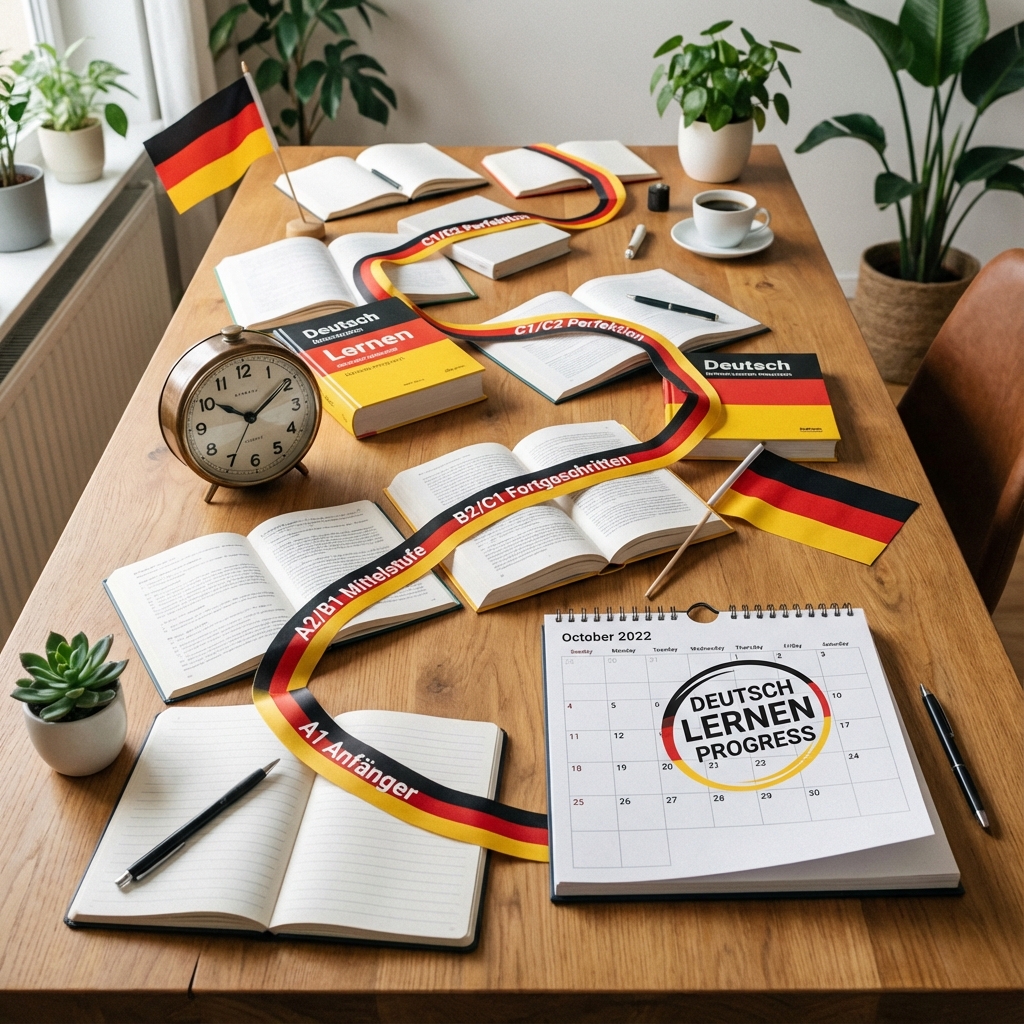
📋What you'll learn in this guide:
- Standard vs Swiss: Why you need Hochdeutsch first
- CEFR Levels: Realistic timeline for A1 to B2
- Immersion Hacks: Phone settings and grocery shopping
- Tandem Partners: How to practice for free
Learning German in Switzerland comes with a unique twist: Swiss German. Here's what you need to know and how to approach it.
Standard German vs Swiss German
First, let's clear up the confusion:
- Standard German (Hochdeutsch) – What you learn in courses, used in writing and formal settings
- Swiss German (Schwyzerdütsch) – The spoken language, varies by region, not standardized
📋The Reality
Good news: Everyone understands Standard German. Challenge: Most people speak Swiss German daily.
Getting Started: The Basics
1. Start with Standard German
Don't try to learn Swiss German first. Build a Standard German foundation, then adapt.
Recommended resources:
- Goethe Institut – Gold standard courses, pricey but effective
- Migros Klubschule – Affordable, practical courses
- Duolingo – Free, good for basics
- Deutsche Welle – Free online courses
2. Set Realistic Goals
The Common European Framework (CEFR) levels:
CEFR Levels Explained
- A1 (Survival): 2-3 months. Order coffee, basic greetings.
- A2 (Basic): 4-6 months. Simple conversations, shopping.
- B1 (Independent): 8-12 months. Navigate daily life, basic work.
- B2 (Professional): 18-24 months. Debate, jokes, professional work.
- C1 (Advanced): 3+ years. Near-native fluency.
Most expats aim for B1-B2 for daily life. B2 is often required for naturalization.
Swiss German: The Real Challenge
Once you have B1 German, start exposing yourself to Swiss German:
Listening Practice
- SRF (Swiss Radio and Television) – News in Swiss German
- Samschtig Jass – Popular card game show
- Podcast: Mundart – Swiss German lessons
Key Differences from Standard German
Standard German → Swiss German
Ich bin → I bi
Guten Morgen → Guete Morge
Wie geht es Ihnen? → Wie gaht's?
Tschüss → Ade / Tschau
Regional Variations
Swiss German isn't one language – it's many dialects:
- Züridütsch – Zurich
- Bärndütsch – Bern (slower, melodic)
- Baseldytsch – Basel
- Walliserdütsch – Valais (closest to Old German)
Start with the dialect of your city!
Daily Practice Tips
1. Switch Your Phone to German
Immersion starts with your devices.
2. Shop in German
Practice at the checkout counter. Swiss people appreciate the effort.
3. Join Language Tandems
Exchange English for German practice. Check:
- tandempartners.org
- Local Stammtisch events
- Our NewHere.ch language exchange events!
4. Don't Be Afraid to Fail
Swiss people often switch to English to "help" you. Politely insist on German:
"Danke, aber ich möchte gerne Deutsch üben!"
Expat Tips That Actually Work
We asked our community what helped them most:
"Taking a intensive course at Migros Klubschule for 3 months gave me the foundation. Then I forced myself to read 20 Minuten every day." – Sarah, 2 years in Zurich
"I married a Swiss person. Not recommending this as a language strategy, but it worked." – Tom, 5 years in Basel
"Watching German shows on Netflix with German subtitles was a game-changer." – Maria, 3 years in Bern
Staying Motivated
Learning a language is a marathon, not a sprint. Tips:
- Celebrate small wins – Your first phone call in German is huge!
- Find your "why" – Career? Citizenship? Social connections?
- Accept the plateau – Progress isn't linear
- Join a community – Learning with others helps
Ready to Practice?
Join our Language Exchange events! Check the events page for upcoming sessions in your city.
Viel Erfolg! (Good luck!)
Put This Into Action
Use the German Timeline Planner to match your study pace to a job search, permit deadline, or move date instead of guessing how much practice is enough.
FAQ
How many hours per week should I study?
For steady progress, aim for at least 4 to 6 focused hours per week. If you need job-ready German faster, 8 to 10 hours per week is a better target.
Should I start with High German or Swiss German?
Start with High German first. It gives you grammar, vocabulary, and formal writing skills. Add Swiss German listening later so local conversations stop feeling like white noise.
How long does it take to feel comfortable in daily life?
Most expats start feeling functional around solid A2 to early B1, especially for errands, appointments, and basic work conversations. The timeline depends more on consistency than intensity spikes.